A New Diagnosis
In parts 1 and 2 of this blog series we identified why traditional approaches to church health are not working. The emphasis placed on revitalization and reformation have led to approaches to church health rooted in behavior modification. It is our desire at Restor(y) to see transformative and long lasting health come to the local church. For this reason, we believe it is essential to move beyond addressing behaviors. We want to approach churches not by asking, “What are you doing?” but “What happened to you?” From this posture of compassionate curiosity we believe we can reach a more accurate diagnosis and therefore, a more effective healing journey.
While traditional approaches to church health described churches as “in need of revitalization” or “in need of reformation” at Restor(y) we recognize that often churches are in need of restoration. Our restorative diagnosis is a trauma-informed approach to church health that has the potential to bring transformative healing to congregations who find themselves declining in number, faith communities who are aging and desiring to reach the younger generation, congregations in seasons of pastoral transition, as well as those faith communities who have walked through scandal or seasons of toxic leadership. How do we do this? We utilize what we call the “Ripple Effect Diagnostic Process” to discover where the Holy Spirit may be desiring to bring about healing and restoration in the life of the church. Below is a brief overview of this process:
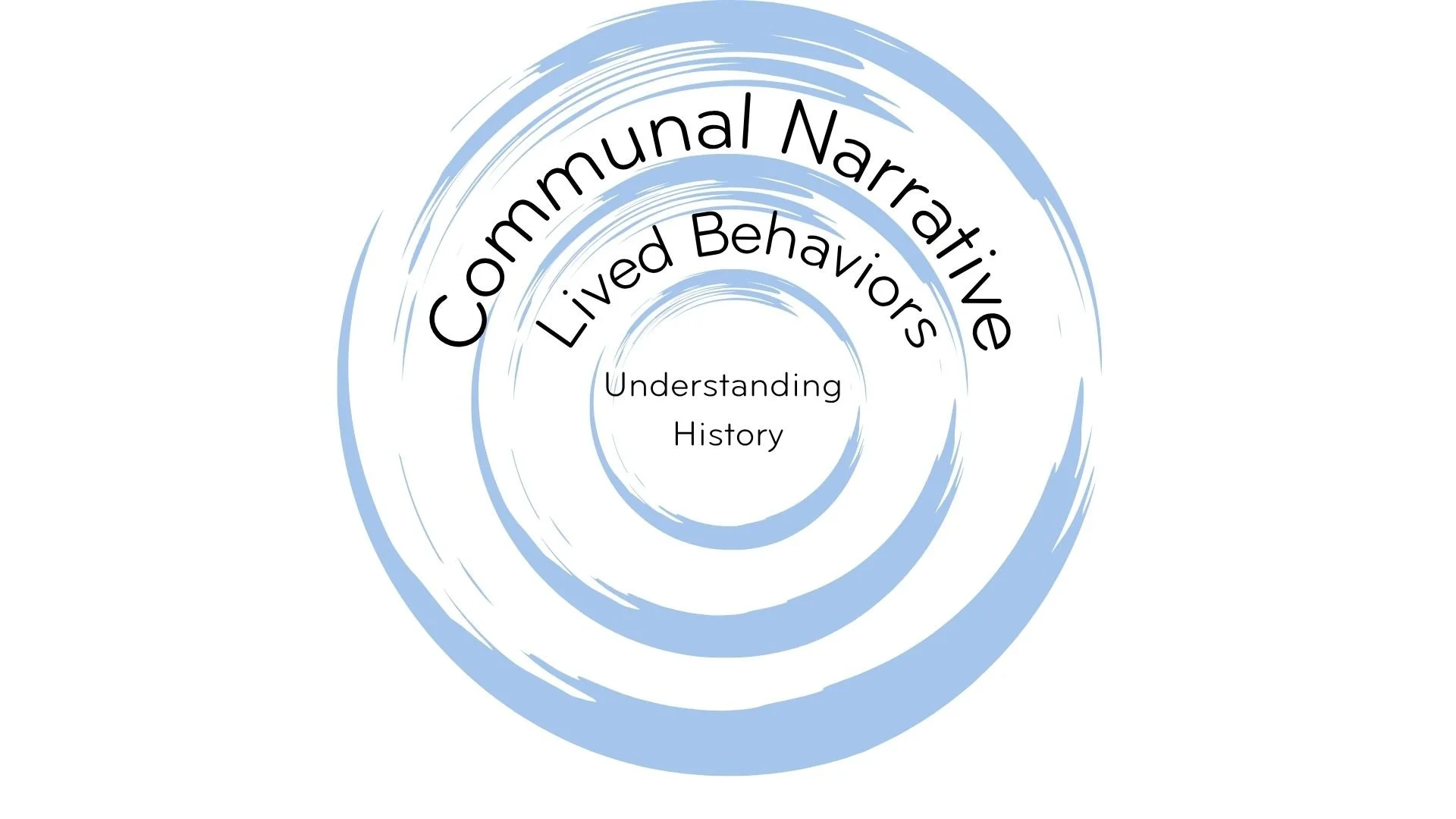
Ripple Effect Diagnostic Process, Copyright Kayleigh Clark, 2026
The Ripple Effect Diagnostic Process is a multi-layered approach in which each stage is building upon the last, and each stage is informing the next. The three stages are:
Understanding History: Before we move forward, we must take time to look back. Congregations are shaped by story, a shared communal narrative that guides their behaviors, values, and relationships. Understanding that story is essential to living as a healthy church, understanding that story requires understanding a congregation’s history. The joyous and the sorrowful moments of a congregation’s past have shaped them into who they are now. To move forward into greater health, we begin by working to unpack the history of a congregation. Through a posture of compassionate curiosity and a trauma informed lens, we ask the question “what has happened here?”
Lived Behaviors: While it is important to know what has happened within a congregation, each faith community is impacted by events differently. This is why the next layer of our ripple effect diagnostic approach is important. From understanding what has happened in the life of a congregation, we then begin to look at how those events have shaped and continue to shape the lived behaviors of a faith community. This is done once again in a posture of compassionate curiosity that seeks to discover and inquire rather than to place blame or move towards behavior correction and modification. Often both healthy and unhealthy lived behaviors may emerge, but the central question is not, “what are the behaviors?” but, “where are they coming from?”
Communal Narrative: Finally, we look to a community’s shared story. What is the communal narrative being told and embodied by this congregation? Often this story is held at the subconscious level and emerges through careful observation of beliefs, values, behaviors, and a congregation’s liturgy. Holding these observations together with what has been discovered through careful looking at a congregation’s history and lived behaviors allows us to name where the Holy Spirit is bringing about a new work of restoration and begin to then move forward.
This diagnostic process is one marked by patient, compassionate, curiosity that allows for congregations to explore their shared stories and prepare themselves for a journey of restoration that will allow them to more fully live into the story God is writing for them. If you have been wondering how to move your congregation towards greater health, we would love to journey with you through this process.
A healthy church is worth working for.